

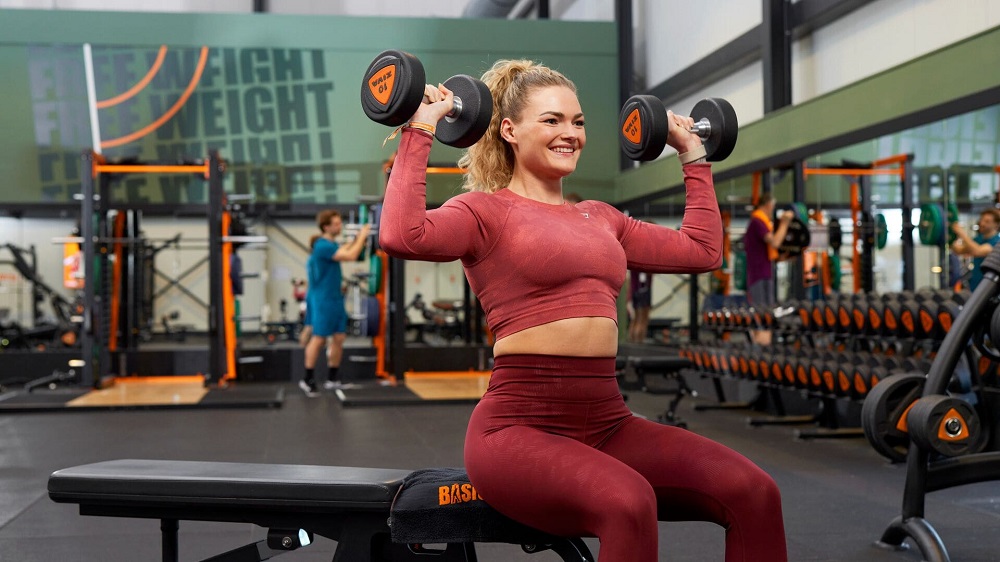
Stepping into a modern gym can easily feel overwhelming. The endless rows of specialized selectorized machines, free weights, cardiovascular decks, and functional training functional areas can induce decision paralysis for beginners and experienced lifters alike. Many individuals make the mistake of entering the facility without a concrete strategy, drifting from one machine to another based on what happens to be vacant. This unstructured approach rarely yields substantial physical adaptations and frequently leads to frustration, stagnation, and eventual abandonment of fitness goals.
To unlock the true power of a gym membership, you must approach your training with a structured, systematic blueprint. An effective routine operates like a long-term investment strategy. It balances structural stress with systemic recovery, matches your unique lifestyle constraints, and shifts seamlessly over time to support ongoing physical progression. Designing a sustainable framework turns your gym time into an efficient, results-driven practice that safeguards your physical independence and metabolic health for decades.
Assessing Availability and Defining Your Split
The most mathematically perfect workout routine is entirely useless if your career, family, or lifestyle obligations prevent you from executing it consistently. The absolute first step in establishing an effective gym routine is conducting an honest audit of your weekly schedule to determine exactly how many days you can realistically commit to the facility.
Once you establish a realistic weekly frequency, you can choose an appropriate training split. A training split simply refers to how you organize the targeting of various muscle groups throughout the week.
-
The Full-Body Split (2 to 3 Days Per Week): This configuration is highly efficient for busy professionals or beginners. Every training session targets the entire musculoskeletal structure, utilizing compound movements that recruit massive quantities of muscle fiber. This setup ensures that even if you miss a day due to an unexpected life event, every muscle group has still been stimulated within the weekly window.
-
The Upper-Push-Pull-Legs Split (3 to 4 Days Per Week): This organization divides training stimulus by functional movement patterns. One day focuses on upper body pushing muscles like the chest, shoulders, and triceps. The subsequent session targets pulling mechanisms such as the back, biceps, and rear deltoids. The final session isolates the entire lower extremity. This provides excellent muscular focus while offering ample recovery time for individual joint structures.
-
The Upper-Lower Body Split (4 Days Per Week): This routine alternates between dedicated upper body training days and lower body training days. It allows for an optimal blend of high weekly frequency and substantial volume per workout session, making it an exceptional framework for developing structural strength and body composition adjustments.
Selecting Foundational Compound Movements
A common pitfall in routine design is over-allocating time to isolation exercises like bicep curls, calf raises, or tricep press-downs. While isolation movements have a distinct place in fine-tuning a physique or addressing specific muscular imbalances, they should never form the core of a longevity-focused routine.
Instead, construct your program around compound exercises. These movements require multiple joint complexes to synchronize simultaneously and call upon large, multi-muscle groups to manage a single load. Compound movements provide a massive stimulus to the central nervous system, trigger a favorable metabolic response, and mirror the natural movement patterns of daily human life.
The Horizontal and Vertical Push
Pushing patterns strengthen your anterior upper body chain. A comprehensive routine should feature a horizontal press, such as a barbell bench press or a heavy dumbbell chest press, alongside a vertical press, such as a standing overhead military press. These movements build density in the pectoral tissues, reinforce the anterior shoulder musculature, and demand a high degree of core stabilization.
The Horizontal and Vertical Pull
To maintain structural balance and protect the shoulder joint complex from injury, you must pull just as much as you push. Vertical pulling movements, including traditional pull-ups, chin-ups, or wide-grip lat pull-downs, build upper back width and strengthen the latissimus dorsi. Horizontal pulling variations, such as chest-supported rows, bent-over barbell rows, or seated cable rows, target the rhomboids and mid-trapezius, which are critical for preserving upright, healthy posture against modern desk-bound habits.
Knee-Dominant and Hip-Dominant Lower Body Patterns
Lower body training should be evenly split between movements that load the front of the leg and those that load the back of the leg. Knee-dominant movements, such as the barbell back squat, leg press, or Bulgarian split squat, heavily challenge the quadriceps and core. Hip-dominant movements, such as the conventional deadlift, Romanian deadlift, or barbell hip thrust, preferentially target the glutes, hamstrings, and erector spinae, creating a powerful, injury-resistant lower body.
Mastering the Principle of Progressive Overload
The human body is an inherently conservative biological machine that actively resists change. It will not expend precious metabolic resources to build new muscle tissue or increase bone density unless it is absolutely forced to adapt to a structural stressor it has never encountered before. This biological reality highlights the absolute necessity of progressive overload.
Progressive overload dictates that you must systematically increase the physical demands placed upon your musculoskeletal system over time. If you enter the gym week after week and lift the exact same amount of weight for the exact same number of repetitions, your body will remain completely unchanged.
You can introduce progressive overload into your training via several practical variables. You can increase the raw weight loaded onto the barbell, perform an additional repetition with a pre-existing weight, add another total set to a specific exercise, or decrease the rest interval between sets to force the muscles to recover faster under fatigue. Keep a meticulous training log, either in a dedicated notebook or a digital application, to track these variables and guarantee that you are forcing your body to progress forward each week.
Managing Inter-Set Rest and Training Intensity
The amount of time you spend sitting on a bench between active sets directly determines the primary physiological outcome of your training session. Short rest periods of thirty to sixty seconds generate high metabolic stress and muscular fatigue, which can be highly effective for local muscular endurance.
However, if your primary goal is building absolute mechanical strength and clean, forceful muscle tissue, you must allow your nervous system and cellular energy stores to recover adequately. Give yourself two to three minutes of rest between intense sets of heavy compound exercises like squats or deadlifts. This duration allows your cells to replenish their internal adenosine triphosphate stores, ensuring you can attack the subsequent set with optimal mechanical force and pristine technical execution.
Furthermore, ensure your training intensity matches your goals. You do not need to train to absolute muscular failure on every single set, as this practice over-taxes the central nervous system and extends necessary recovery times exponentially. Instead, aim to finish the majority of your working sets with one to two repetitions left in reserve, a point where your movement speed naturally begins to slow down, but your structural form remains completely flawless.
Frequently Asked Questions
Why do some individuals experience a sudden drop in immune health when first starting an intense gym routine?
When a person introduces a sudden, massive increase in physical volume and intensity without adequate conditioning, the body perceives this structural damage as a severe systemic stressor. This sudden physical load causes a prolonged elevation of circulating cortisol and adrenaline, stress hormones that temporarily suppress immune cell function. Ensuring a gradual progression in volume and prioritizing post-workout nutrition helps mitigate this temporary window of vulnerability.
How does the concept of active insufficiency alter the effectiveness of calf exercises performed with a bent knee?
The calf complex is primarily composed of two muscles: the gastrocnemius and the soleus. The gastrocnemius is a biarticular muscle, meaning it crosses both the knee joint and the ankle joint. When you perform calf raises on a seated machine with your knees bent at a ninety-degree angle, the gastrocnemius is placed in a shortened position, rendering it actively insufficient and unable to generate significant force. Consequently, bent-knee calf exercises isolate the deeper soleus muscle, whereas straight-leg variations target the larger gastrocnemius.
What physiological mechanism explains why strength gains occur rapidly during the first few weeks of a new gym routine?
The rapid increase in strength experienced by beginners during the opening weeks of training is almost entirely driven by neurological adaptations rather than the rapid growth of new muscle tissue. The brain quickly becomes more efficient at recruiting existing motor units, increasing the firing frequency of motor neurons, and improving inter-muscular coordination. Essentially, your nervous system learns how to utilize your pre-existing muscle fibers with far greater efficiency before the body invests energy into structural hypertrophy.
Why is training the core using isometric stabilization superior to performing repetitive spinal flexion exercises like crunches?
The primary evolutionary function of the human core musculature is to stabilize the spine, transfer force between the lower and upper body, and resist unwanted movement. Repetitive spinal flexion, such as traditional crunches, places high compressive loads on the intervertebral discs, which can accelerate wear and tear over time. Utilizing isometric stabilization exercises like planks, bird-dogs, and Pallof presses trains the core to perform its natural role of maintaining a neutral spinal alignment under external forces.
How does the order of exercises within a single workout session alter the overall safety and efficacy of the routine?
Exercises should always be ordered from most complex and demanding to least demanding. Multi-joint compound movements require high levels of mental focus, coordination, and stabilizing energy from surrounding musculature. Performing these exercises at the start of a session ensures you execute them with fresh neurological and physical capacities. If you reverse this order and perform isolation movements first, the stabilizing muscles will be fatigued, significantly compromising your structural form and increasing injury risks during heavy lifts.
What is the distinction between systemic fatigue and local muscular fatigue, and how do they impact subsequent training sessions?
Local muscular fatigue refers to the temporary depletion of energy substrates and accumulation of metabolic byproducts within a specific muscle group, which resolves within a few days of rest. Systemic fatigue involves the exhaustion of the central nervous system, neurotransmitter depletion, and chronic elevation of inflammatory markers throughout the entire body. While local fatigue can be overcome by altering muscle groups, systemic fatigue degrades coordination, reduces force production across all movements, and demands a complete reduction in total training volume.